Lean-Controlled Sports Wheelchair
Boise State University — Senior Design · 2026 · Prototype development and integration

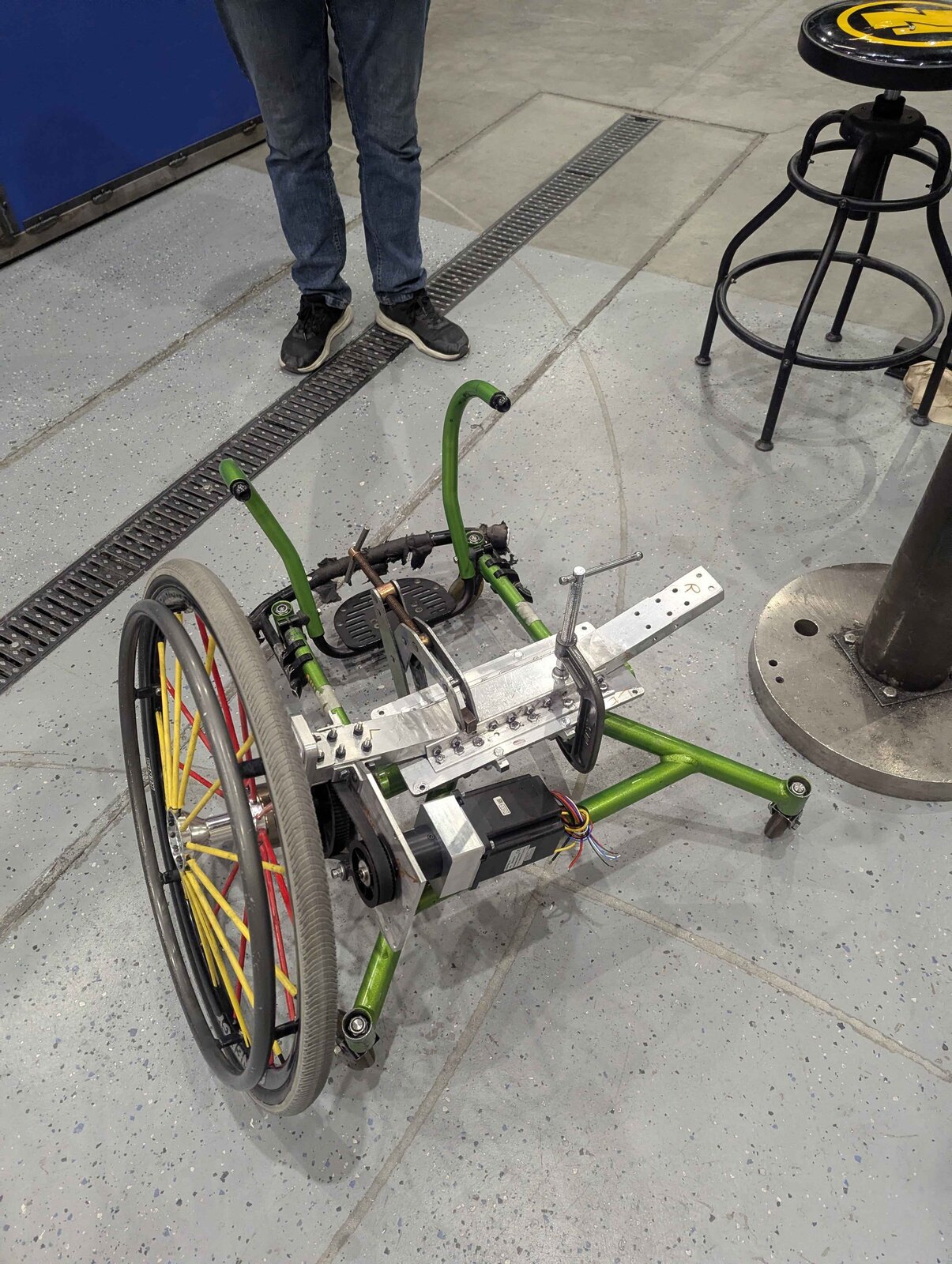
Partially complete wheelchair prototype with custom-fabricated drivetrain and mounting assemblies installed.
Project Overview
Our senior design team is developing a motorized sports wheelchair controlled by the athlete's body movements rather than traditional hand propulsion. The goal is to let a wheelchair athlete maneuver during basketball and other court sports without giving up the use of their hands for shooting, passing, and ball handling.
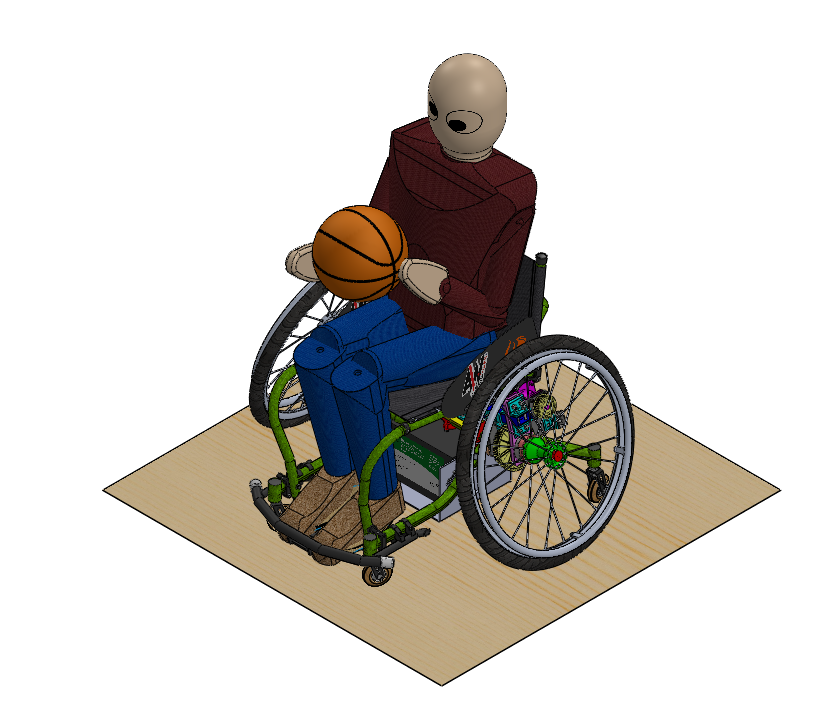
We are modifying an existing sports wheelchair with a custom drivetrain, motors, batteries, and a pressure-sensing control system. The project requires balancing performance, durability, manufacturability, safety, and the constraints of the wheelchair frame we started from.
The Engineering Challenge
The hard part is not the idea — it is fitting a complete electromechanical drive system onto a frame that was never designed to carry one, without compromising the handling that makes a sports chair worth using. Every custom component has to share space with an existing tube geometry, survive court-sport loads and impacts, remain serviceable, and be something our team can actually manufacture with the tools available to us.
My Role: Mechanical Design and Fabrication
I have taken a leading role in the mechanical design and fabrication of the wheelchair, particularly the custom drivetrain and motor mounting systems.
The project has given me extensive hands-on machining experience, including:
- Operating a manual lathe and 2-axis CNC mill.
- Machining components that require close dimensional tolerances.
- Producing press-fit connections and precision mechanical interfaces.
- Fabricating and assembling custom drivetrain components.
- Translating SolidWorks models into physical components.
- Troubleshooting manufacturing and assembly problems.
- Making design decisions based on the tools, materials, and realistic fabrication constraints we have.
One of the most valuable lessons has been understanding the difference between a design that works in CAD and one that can be manufactured, assembled, serviced, and operated reliably.
Mechanical Design
The wheelchair uses a custom drivetrain built around dual electric motors and a quick-disconnect dog-coupling system.
Design considerations include shaft alignment, bearings, press fits, mounting geometry, drivetrain durability, assembly access, and integrating custom components with an existing sports wheelchair. The work also requires understanding the relationship between motor performance, gear reduction, available packaging space, and wheelchair dynamics.
SolidWorks has been used extensively for part design, assemblies, and advanced surface modeling where conventional modeling tools were not sufficient.
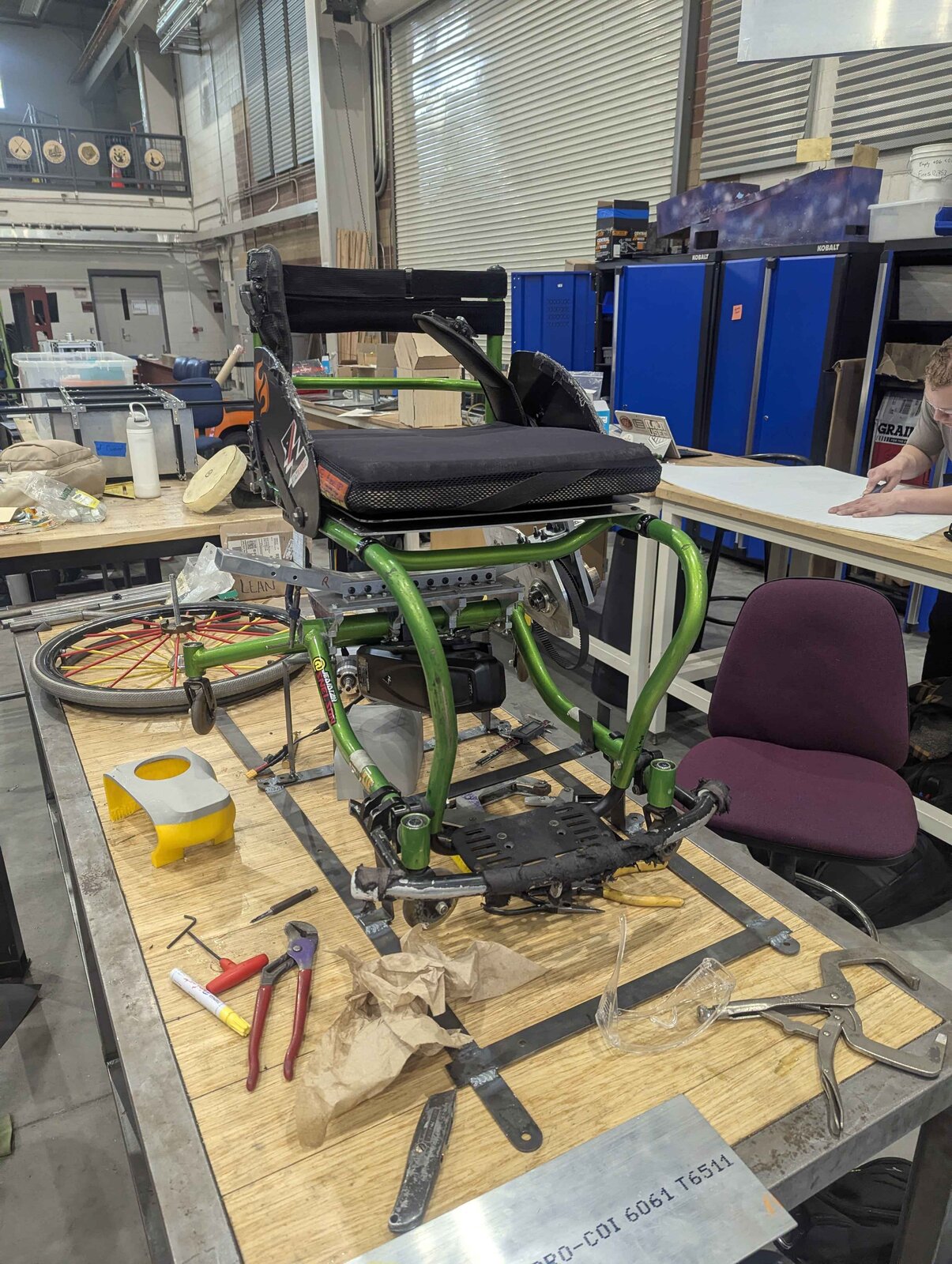
Mechanical integration in progress: adapting the existing sports wheelchair frame to accommodate the motorized drivetrain and custom mounting components. Click to enlarge.
Teamwork and Leadership
This is a multidisciplinary project involving mechanical, electrical, and computer systems engineering. I have helped lead the mechanical fabrication effort, coordinate responsibilities, and keep us moving toward project milestones.
That has meant assigning work based on individual strengths, managing differences in experience and working styles, communicating across engineering disciplines, and dealing with coordination and accountability problems as they come up. It has been an important practical experience in technical leadership — specifically, learning how to keep a diverse engineering team productive while working toward a common technical objective.
Electronics and Controls
Although my primary contribution is mechanical, I have also independently explored embedded electronics and built an ESP32-based controller prototype to support project development. That work has broadened my understanding of microelectronics and hardware integration, and it helps me collaborate more effectively with the electrical and computer systems engineers on the team.
Prototype Development
The project has progressed from conceptual design and engineering analysis into machining, assembly, and prototype integration. The photographs below show the transformation from an existing wheelchair into a modified system with custom structural components, motor mounts, and drivetrain assemblies.
The chair is still in active development. Full-system performance, durability, and on-court testing have not yet been completed, and the targets we are designing to are design goals rather than measured results.
Gallery
Technical Documentation
The team's CAD model, design report, and control-system demonstration.
Critical Design Review
My team's (very long) critical design review report. It is a comprehensive listing of all the stuff we did.
 Open
full report
Pressure Sensor Array Demo
Play with the pressure sensing algorithm in an interactive demo (AI generated)
 Open